

America Marches Into Another Forever War
With no attack on the US and no public mandate, Washington launches a war Americans never asked for, and voters are not on board

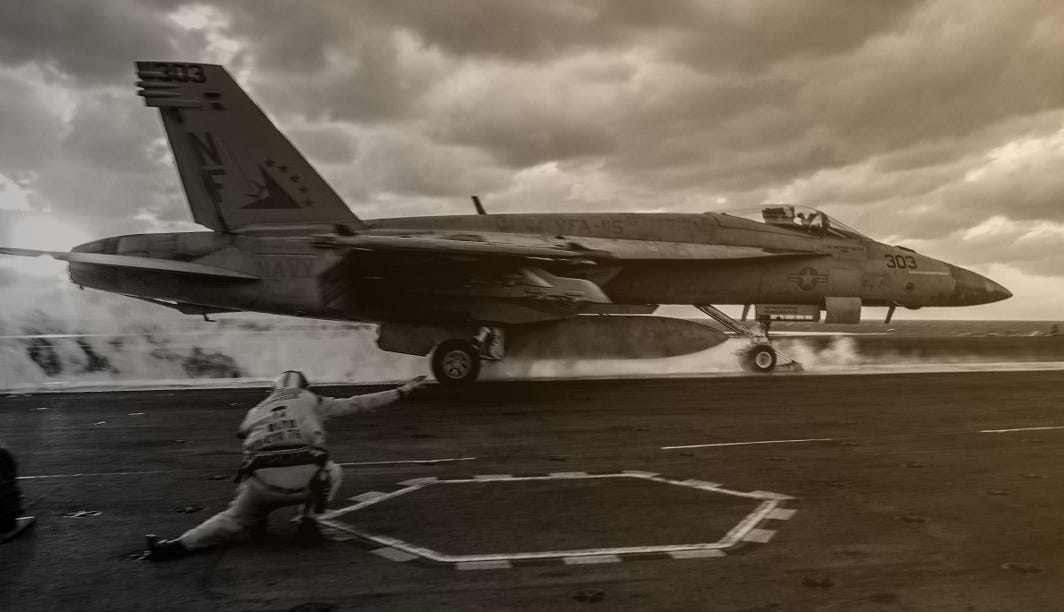
Tonight, the peace president, Donald Trump, launched airstrikes against Maduro’s Venezuela as bombs rain down in its capital of Caracas.
American opposition to military action in Venezuela could hardly be more unified, with polling consistently showing that Americans do not want to be dragged into yet another overseas military conflict.
Data For Progress found the highest level of support for US military action in Venezuela, with 33% of Americans backing the move, even as 60% of respondents in the same poll said they oppose military action outright.
Support for US military involvement in Venezuela rarely breaks 30%, while surveys from Marquette and YouGov/CBS found more than 70% of Americans opposed to the idea. Even earlier polling from Ipsos and YouGov/Economist showed opponents outnumbering supporters by more than two to one.
The Trump administration, for all its war fervour and constant appeals to military dominance, has done a remarkably poor job of justifying why military action against Venezuela would be necessary in the first place.
Americans are being asked to support a war against a country that did not attack the United States, has taken no concrete steps toward doing so, and where the US would once again be the party firing the first shot.
When George W. Bush and Dick Cheney led the country into Afghanistan and later Iraq, they did so with broad public support, even if that support eventually evaporated. The Bush administration at least invested significant effort into selling the case for war, however misleading it may have been, both to Americans and to the international community, particularly in the aftermath of 9/11.
That groundwork mattered. In the run-up to the Iraq war, Pew Research found 66% of Americans supported taking military action against Saddam Hussein and Iraq, while Gallup recorded even stronger backing, with 76% in favor of invasion.
Venezuela presents the complete opposite scenario. Any potential war would come after decades of American intervention abroad, leaving the public deeply skeptical of foreign entanglements and wary of the costs that follow.
Compounding the problem, the 2003 invasion of Iraq unfolded against the backdrop of a strong economy. By contrast, the Trump economy of 2025 is showing clear signs of decline, with inflation remaining stubborn and household finances under strain.
Want To Support My Work And Get Access To Polling Deep-Dives, Full Length Articles, Election Models And More?
I Rely On Support From Readers Like You, So Thank You To Those Who Choose To Support My Work
Sign Up For A Monthly Membership For As Little As $5/Month
Returning to the polling, Data For Progress found that Americans oppose military engagement against Venezuela by a wide margin.
60% of Americans oppose sending US troops into Venezuela to remove Maduro from power. Support is heavily concentrated among Republicans, with 58% in favor, compared to just 21% of independents and 14% of Democrats.
Perhaps even more striking, 40% of Americans support sending US troops into Mexico to crack down on drug trafficking, while 57% oppose the idea. Once again, Republicans are far more likely to support such action, with 66% backing military intervention, compared to 31% of independents and 19% of Democrats.
The one area where opinion is somewhat less settled concerns bombing boats in the Caribbean that the Trump administration claims are transporting drugs into the United States.
When asked whether these strikes are effective at reducing drug trafficking, 42% say they are effective, while 52% say they are not. Support is highest among Republicans, with 70% viewing the strikes as effective, compared to 33% of independents and 18% of Democrats.
This debate exists despite the fact that it remains unclear whether the boats being targeted are carrying drugs at all. Those responsible for the strikes have already faced potential war crime allegations, even before any formal war against Venezuela has begun.
Want to support my work further?
Buy a gift subscription or two, and let other substack subscribers enjoy paid content for a month!
At the heart of the issue remains a simple reality, that Americans do not want to be involved in another foreign war.
Data For Progress found that 62% of Americans believe the US should be less involved in resolving foreign conflicts, while only 32% say the country should be more involved.
Opposition is strongest among independents at 69%, with Democrats close behind. Even among Republicans, half oppose greater involvement overseas, while 43% want the US to play a larger role.
After two decades of war in Afghanistan, trillions of dollars spent, and deeply questionable outcomes in Iraq, Syria, Libya, and elsewhere, Americans are exhausted by foreign interventions, especially those involving countries that have not attacked the United States.
Even if the Trump administration were able to capture Maduro and install a new government in Venezuela, there is no clarity about the geopolitical consequences, let alone the human and political fallout within the country itself.
Afghanistan and Iraq offer clear warnings. In both cases, the US was forced to keep troops stationed for years simply to maintain a fragile sense of order. Afghanistan, in particular, exposed the limits of American military power and with economic conditions at home continuing to deteriorate under Trump’s domestic policies, Americans are unlikely to accept the costs of another open-ended conflict abroad.
The Bush Administration governing of Iraq was a fiasco. But they were geniuses compared to the current Administration.
"When George W. Bush and Dick Cheney led the country into Afghanistan and later Iraq, they did so with broad public support, ..."
You misspelled "lied". Hmph.